Common technical specifications related to DLP projectors include lumen rating, which represents brightness, contrast ratio, which measures dynamic range of brightness and darkness, and color specifications, – which affects color performance. Terms such as “color gamut” and “wide color gamut” may also be commonly used, though the concepts of “wide” or “narrow” projector color gamuts may be less intuitive.
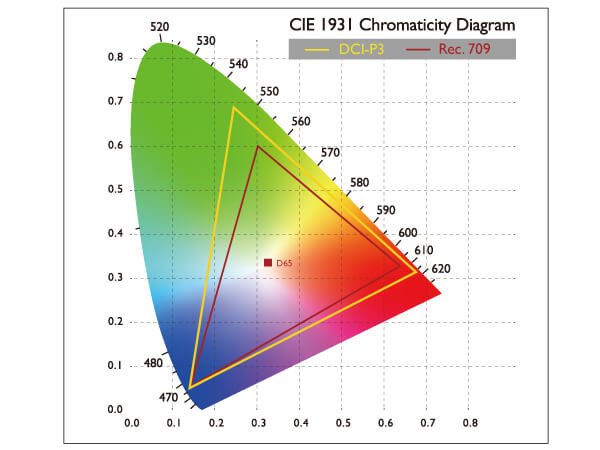
Simply stated, color gamut is the range of colors a display device can show - the wider the color gamut, the more colors it can reproduce. However, the size of the color gamut alone cannot guarantee superior color performance. In addition to meeting international A/V color standards, the display device must also have low Delta E (color difference) values.
In Hollywood films, Rec.709 and DCI-P3 are the standards for theater-quality colors. For home theater use, projectors that conform closest to Rec.709 or DCI-P3 color standards offer superior color gamuts and the best ability to reproduce the authentic color of the film. And projectors with the lowest Delta E values* provide the most accurate colors for audiences to see precisely the colors and message the director intended, as well as the truest colors of the original film for a genuine movie-going experience. Therefore, how closely a projector’s color gamut corresponds to international color standards is significantly more important than the wideness or narrowness of the color gamut for color performance.
✱Delta E values can be found from professional A/V media benchmark reports or from manufacturer color calibration reports.