Not every gaming setup is ready to run at 240Hz, and upgrading your monitor alone isn’t enough. You need the right combination of hardware, settings, and cables to unlock its full potential. Let’s walk through the key steps—and explain why 240Hz might be the best way to futureproof your gear.
1. Get a Monitor That Supports 240Hz
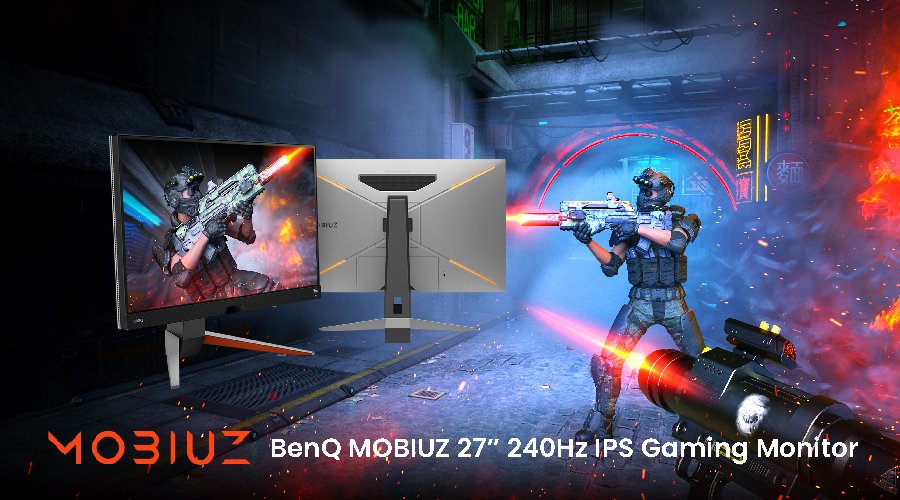
Start with a display that’s actually capable of 240Hz. BenQ MOBIUZ gaming monitors like the EX270M and EX270QM offer full 240Hz support on IPS panels, with features designed to elevate your gameplay.
2. Make Sure Your Graphics Card Can Keep Up
Modern GPUs are well-equipped to handle 240Hz—at least at 1080p and 1440p. An RTX 3060 can manage 1080p @ 240Hz with ease, while an RTX 3070 or newer can do the same at 1440p. If you’re into competitive games like Fortnite, Apex Legends, Overwatch 2, or Rocket League, these aren’t demanding and can hit high frame rates even on mid-range cards.
And if you’ve invested in something powerful like an RTX 4070 but are using a 144Hz display, you’re not maximizing your system’s potential. Many games run well over 165fps on these cards, meaning a 240Hz monitor would let your system stretch its legs instead of bottlenecking performance.
That said, avoid 240Hz 4K monitors for now—even the best GPUs today can’t deliver a consistent experience at that combo.
3. Set Your System to 240Hz
On Windows 10:
Go to System > Display > Advanced Display Settings > Display Adapter Properties. Under the “Monitor” tab, choose your preferred resolution and select 240Hz from the refresh rate dropdown.
On Windows 11:
Navigate to System > Display > Advanced Display > Display information > Choose a refresh rate. Pick 240Hz from the list.
Or use your GPU control panel:
-
NVIDIA: Open NVIDIA Control Panel > Display > Change Resolution. Choose a PC resolution and 240Hz refresh rate.
-
AMD: Right-click desktop > AMD Radeon Settings > Display. Select your resolution and 240Hz option.
4. Use the Right Cables and Ports
To get full 240Hz, use DisplayPort 1.2a or higher, or HDMI 2.0 (check your port labeling).
Always update your GPU drivers and make sure the correct ports are used—especially on laptops or consoles with multiple outputs.