azure-location

Besoin de conseils ? Notre chat en ligne vous met en relation avec de vrais experts. Pas de robots, juste de l'aide humaine !

Chat avec nos experts !

Besoin de conseils ? Notre chat en ligne vous met en relation avec de vrais experts. Pas de robots, juste de l'aide humaine !

Évaluation du moniteur 24 pouces, à colorimétrie étendue, et étalonnage matériel, SW240 de BenQ

  • Keith Cooper
  • 2018-06-01

Photographe d’architecture et imprimeur d’art/Royaume-Uni

Keith est un photographe commercial et un imprimeur d’art, établi à Leicester au Royaume-Uni, couvrant la photographie d’architecture, d’intérieurs et industrielle. Ses photos sont souvent utilisées par de nombreuses publications à travers le monde.

Keith a testé le dernier moniteur BenQ destiné aux photographes et professionnels de la création graphique, souhaitant un moniteur avec une colorimétrie plus étendue et avec étalonnage matériel. Avec une taille de 24 pouces, il est plus petit que ses homologues de 32 et 27 pouces préférés pour une utilisation de bureau, mais absolument idéal pour le travail dans un espace plus restreint, ou avec ordinateur portable comme écran principal. Plus d’informations sur BenQ

Index des articles

Le SW240 de BenQ

Ok, je suis peut être trop habitué aux grands moniteurs, mais ma première impression en voyant le SW240 a été combien il était petit…

Ensuite, j’ai réalisé qu’il ne s’agissait d’un moniteur destiné à remplacer mon équipement de bureau plus grand, mais d’un moniteur haute qualité pouvant opérer dans des espaces plus petits ou comme écran externe pour mon ordinateur portable.

Fonctionnalités du moniteur

Le nouveau moniteur est destiné au marché de la retouche photo, complétant le SW2700PT QHD de 27 pouces, le SW271 UHD de 27 pouces, et le SW320 UHD de 32 pouces - liens vers mes évaluations

  • Hardware Calibration with Palette Master Element calibration software
  • Colour Mode HotKey for colour mode switching
  • Advanced Black & White mode
  • Optional shading hood

I’m looking at the standard version without the hood.

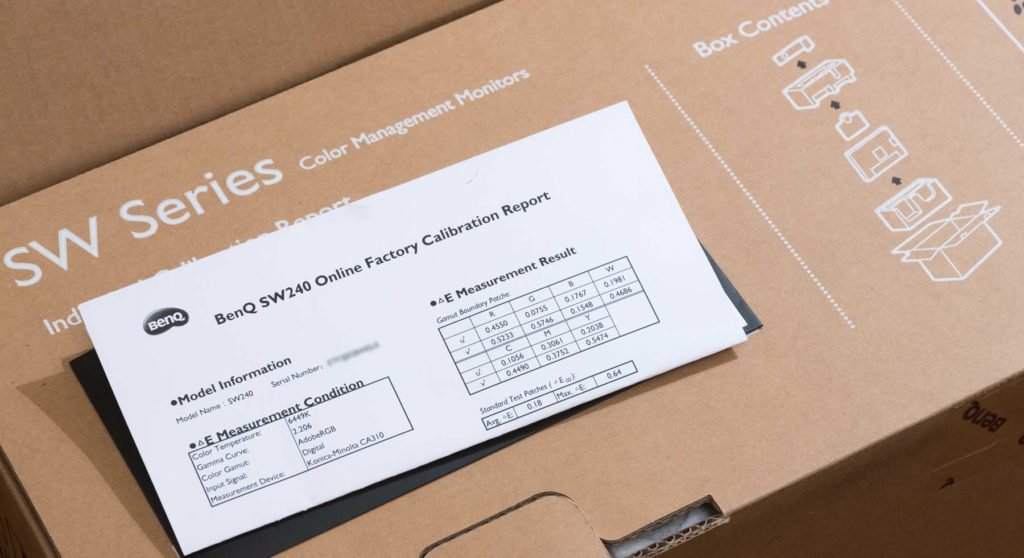
The monitor is well packed, and on opening you get the monitor’s own calibration certificate.

Assemblage et test

L’assemblage et le branchement du moniteur ne prennent que quelques minutes.

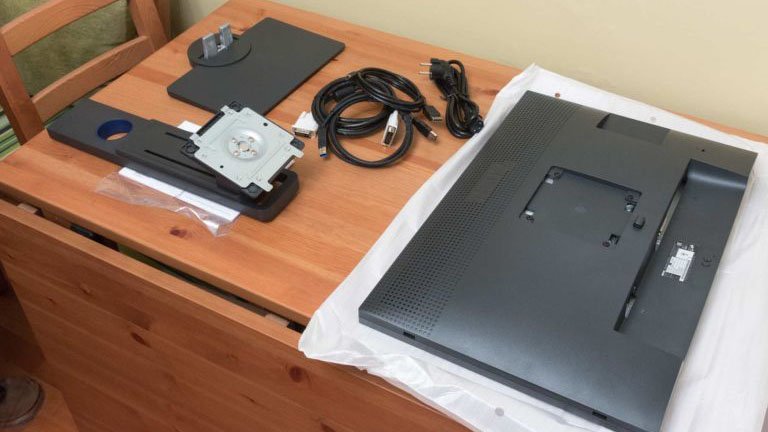
First up a quick check of the box contents.

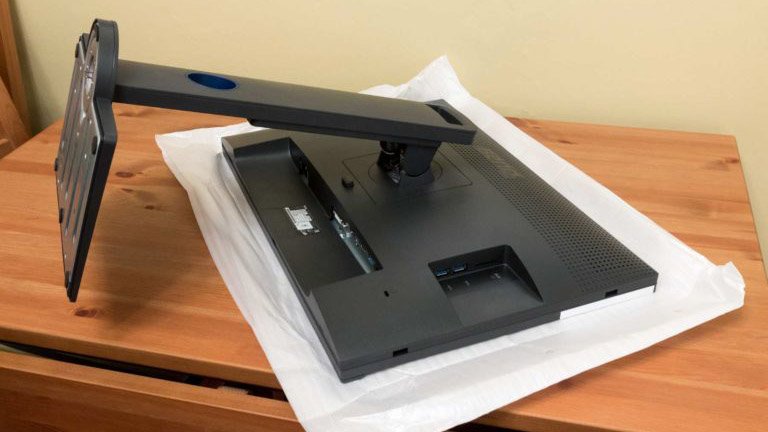
You’ll note that I’ve used the bag for the display to protect it and the table from marks.

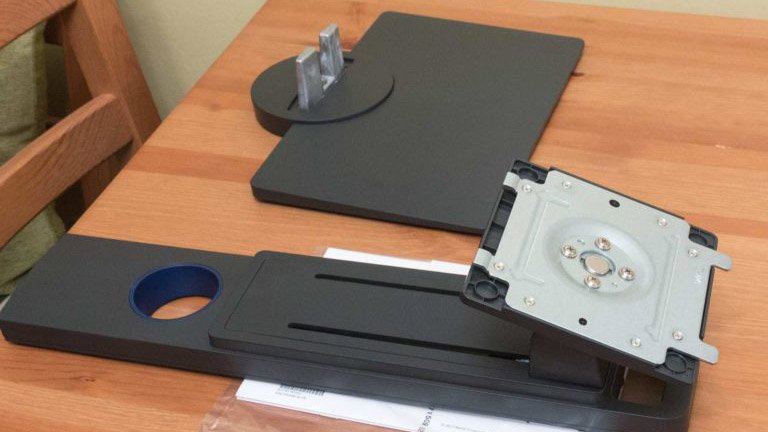
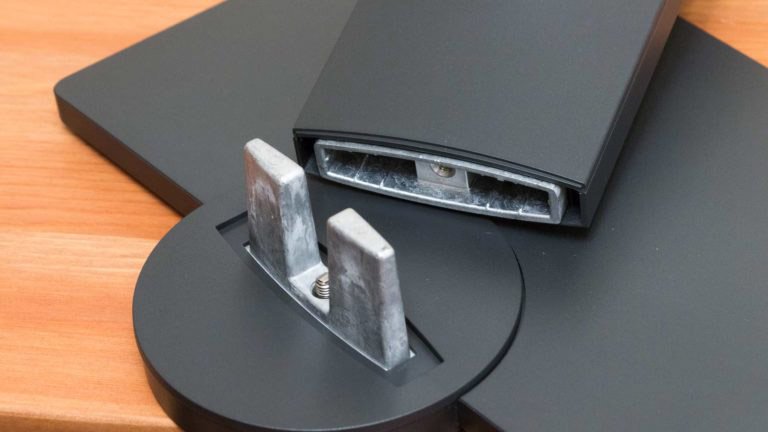
The stand comes in two parts.

The two slot together.

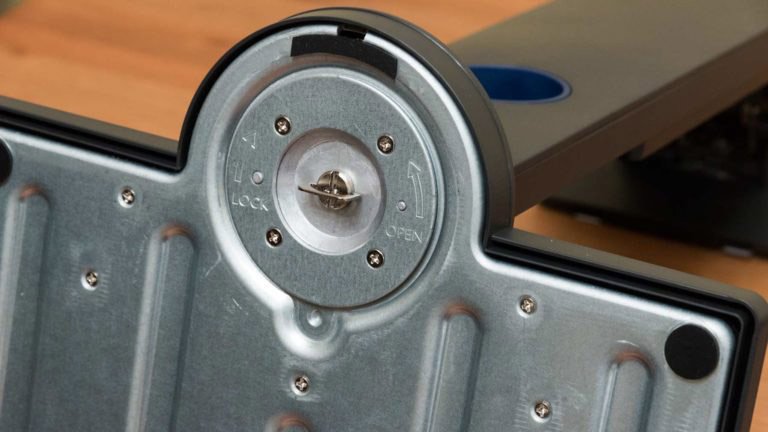
The screw can easily be tightened by hand.

The panel mounting plate then simply clips into place at the back of the screen.

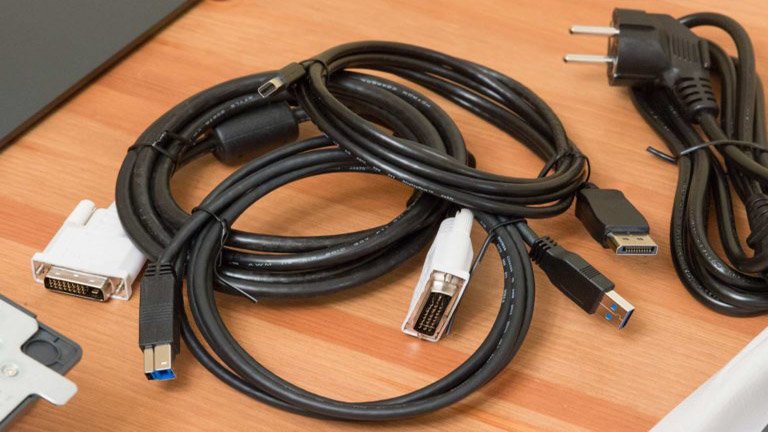
A good set of leads – even if I have to swap the power lead I’ve got for a UK plug version.

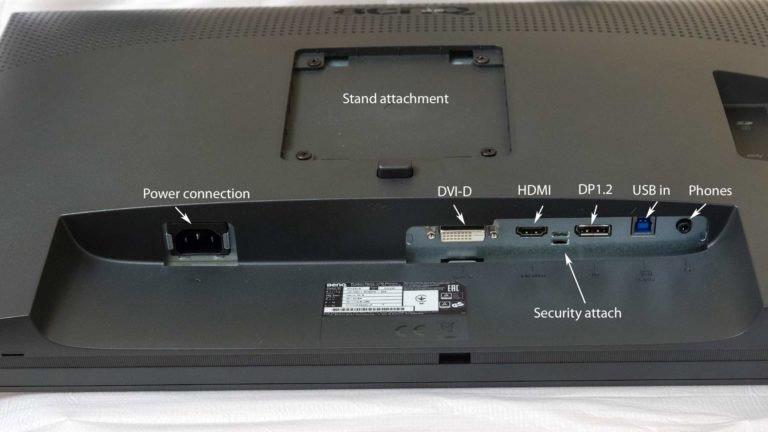
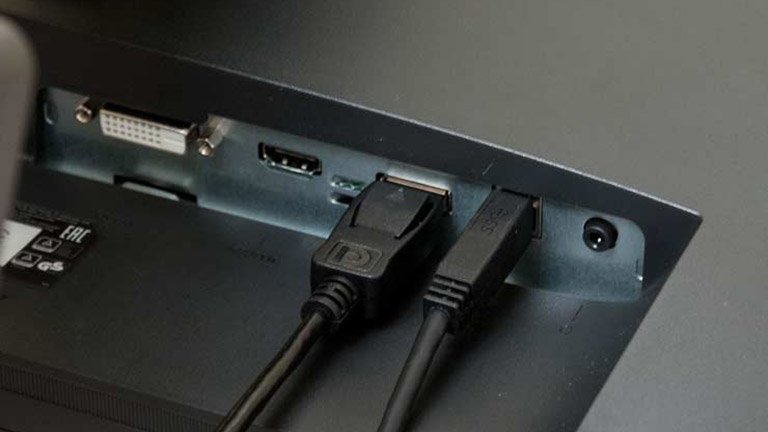
All the connections at the base.

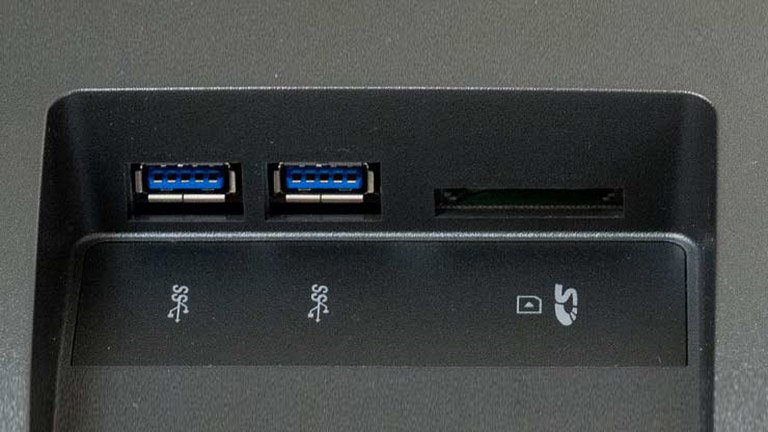
There are two USB-C sockets at the side, along with an SD card reader.

I just need the DisplayPort lead and the USB lead for my MacBook.

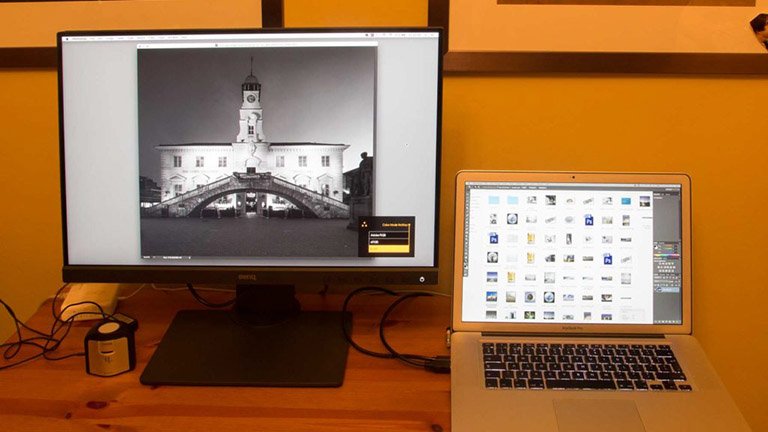
Here it is set up and working (in black and white mode).

The whole process would take not a lot more time than it has for you to read this.

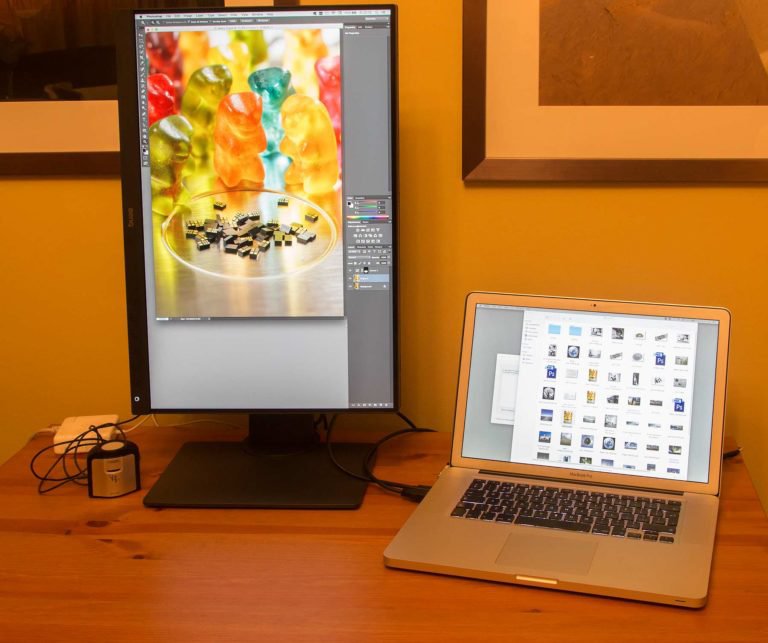
(BTW, the room is orange because of the halogen lighting – I’ve white balanced shots to the screen)

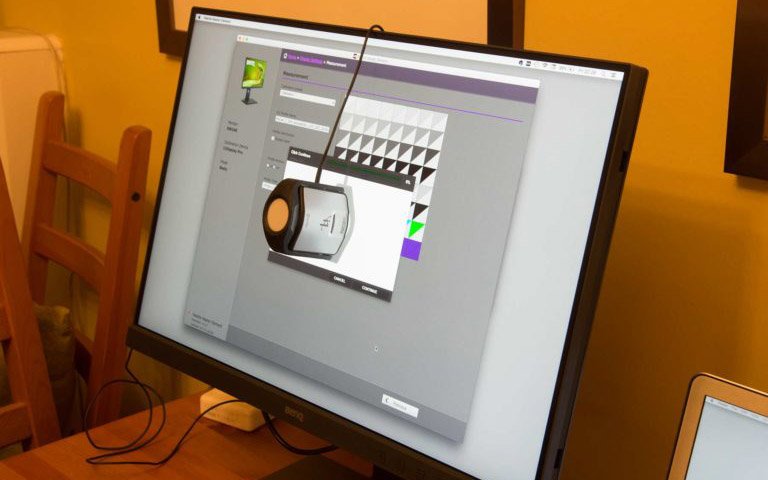
The display worked just fine with my oldish MacBook Pro, whether in landscape or portrait mode. You’ll notice the device to the left – this is an X-rite i1Display Pro calibrator [review] that I used for initial screen calibration and profiling.

Profilage et étalonnage

Avant d’utiliser un quelconque nouveau moniteur, j’aime m’assurer qu’il est correctement configuré, et cela signifie le profiler et l’étalonner.

Remember that profiling is measuring the characteristics of the monitor (how red its deepest red is for example) whilst calibration involves setting it to a known state (its whitepoint or maximum luminance for example). These two terms are often used interchangeably, but remember that they do actually refer to different things.

BenQ fournit un logiciel gratuit permettant un étalonnage matériel interne du moniteur à configurer. L’étalonnage matériel tend à être supérieur du fait qu’il permet une définition bien plus précise des caractéristiques du moniteur, et peut fournir des résultats plus uniformes et réguliers.

Il s’agit d’une fonctionnalité qui était auparavant limitée aux moniteurs haut de gamme, mais s’impose dans des moniteurs plus économiques (de meilleure qualité).

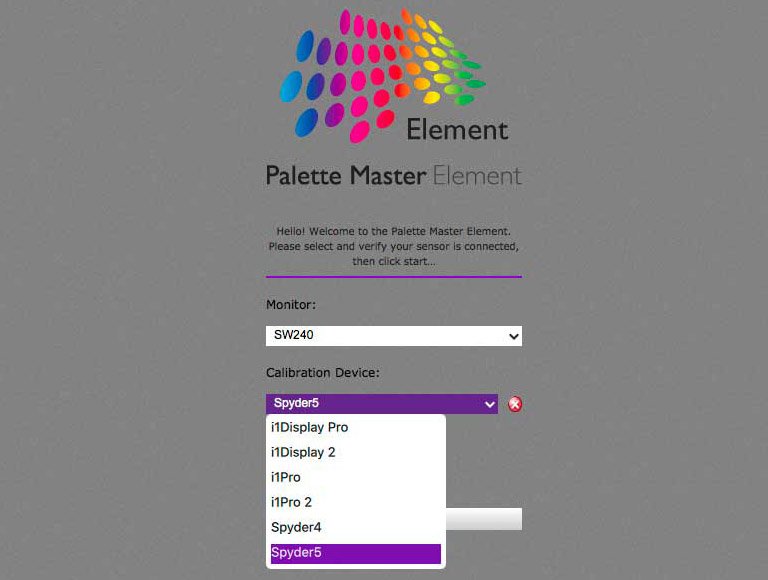
The Palette Master Element software (Mac and PC) supports a number of different measuring devices.

No ColorMunki support I’m afraid – You’ll need to complain to X-rite, not BenQ about that though, since they don’t make drivers available to third parties.

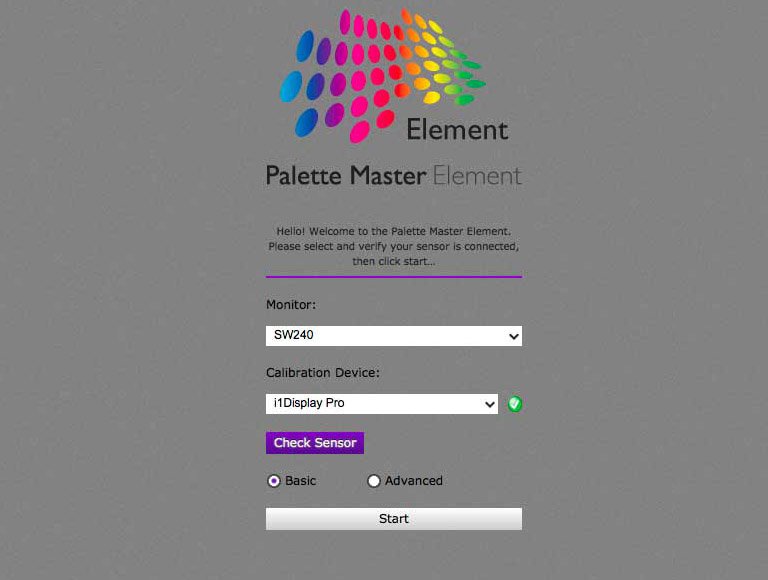
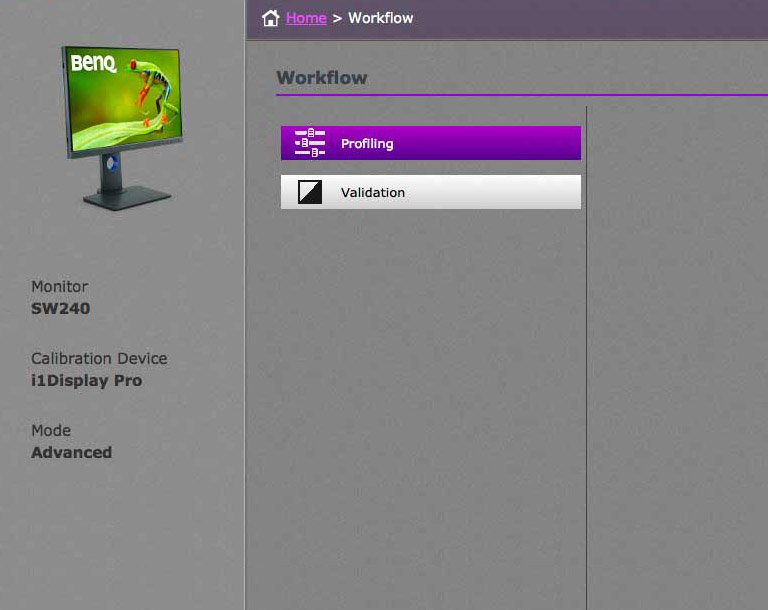
The software has basic and advanced modes. The main difference is that you get more options for the advanced mode.

I’m using the i1Display Pro device – the software will let you check that it’s connected.

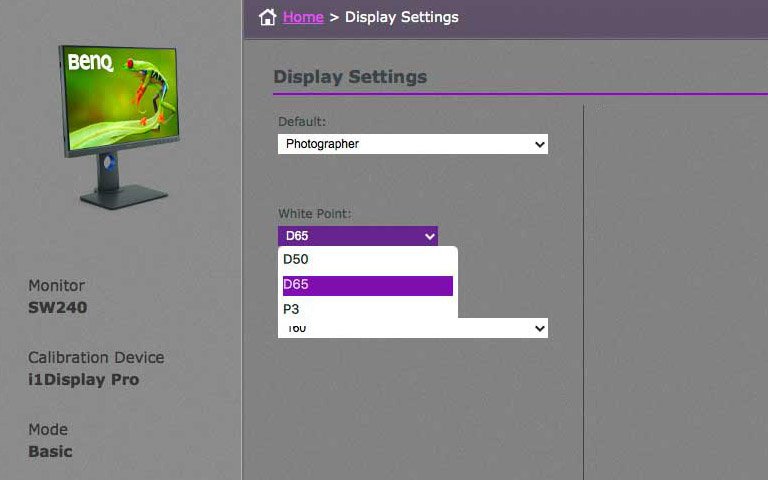
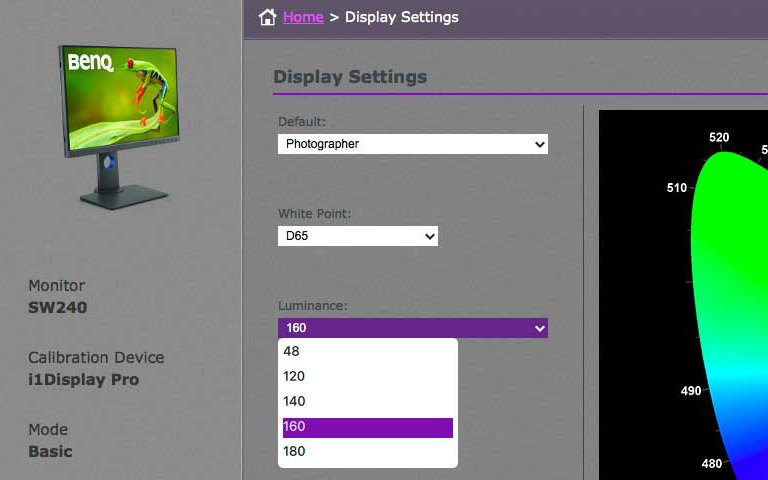
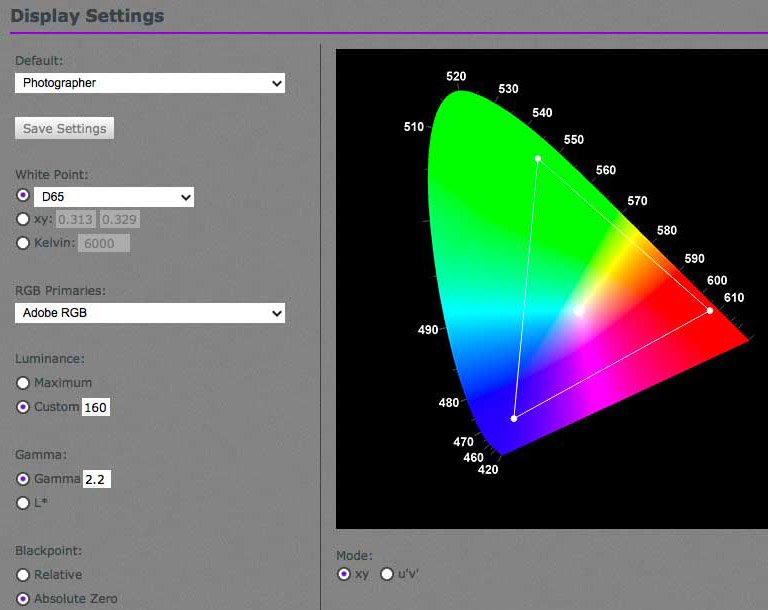
There are default groups of settings such as the ‘photographer’ one here.

I can change the white point as I see fit.

I’ll come back to a discussion of my personal choices for settings later.

I can choose how bright I want the screen too.

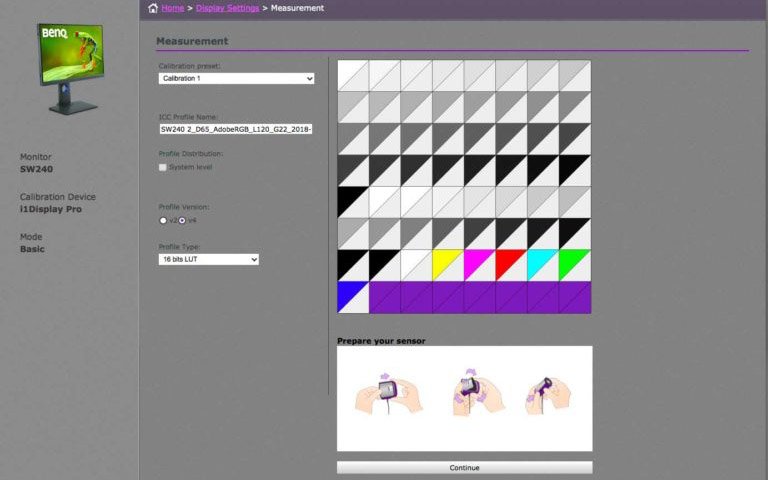
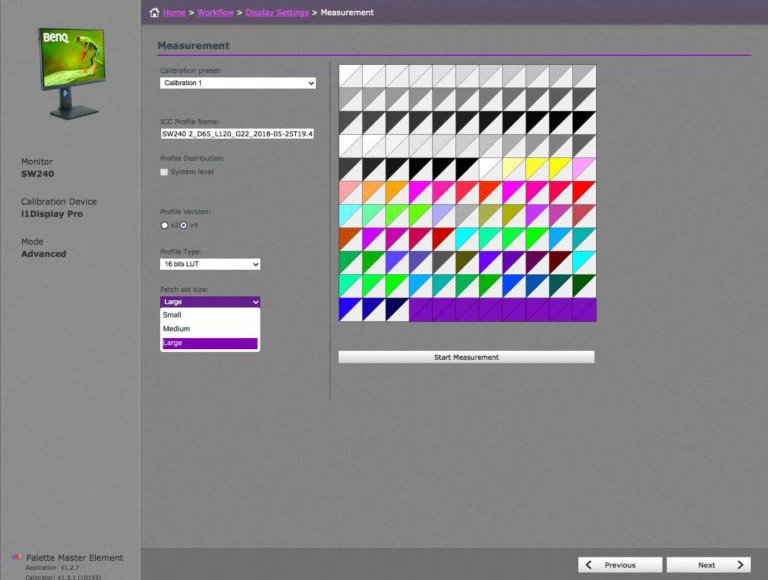
Once I’ve decided on the settings, I move to measuring the screen characteristics.

I need a name for the ICC profile generated – the suggested one contains the various settings and will do just fine.

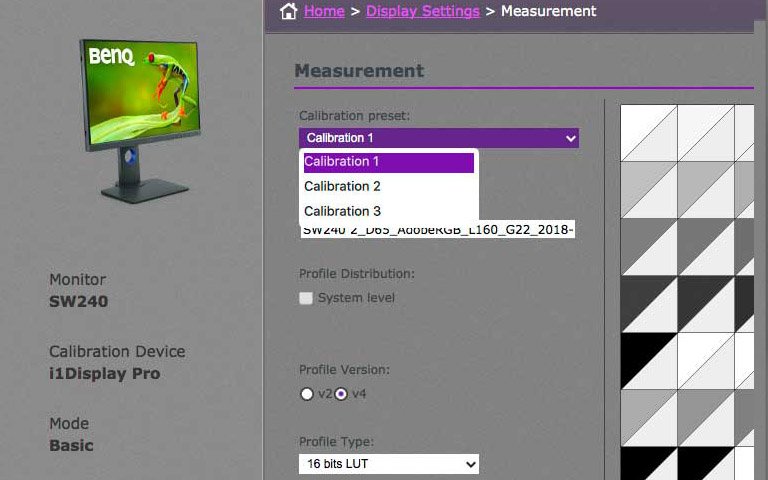
I’m actually saving this calibration set to one of the custom ones (I’ll come back to these choices).

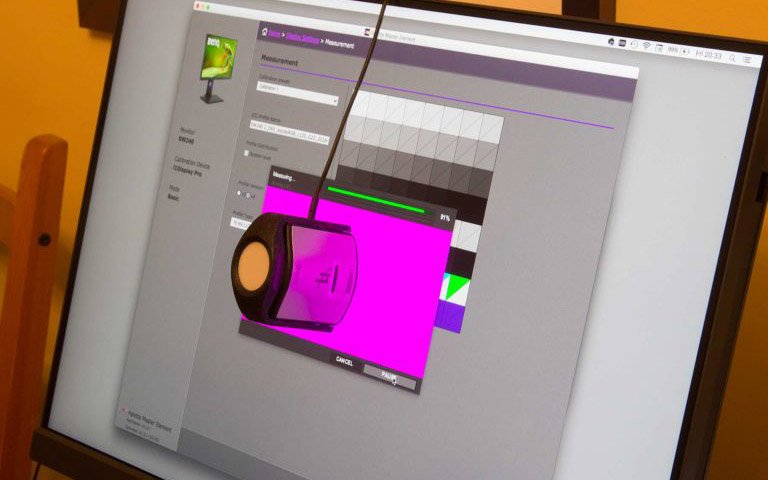
Once I’m ready to take the measurements, I just hang the sensor over the monitor.

With the MacBook Pro I need to set the screen brightness manually, but on other systems it’s automatic.

Once the brightness is set, the screen displays various greys and colours, whilst the the i1Display measures them.

After a few minutes, the process is finished.

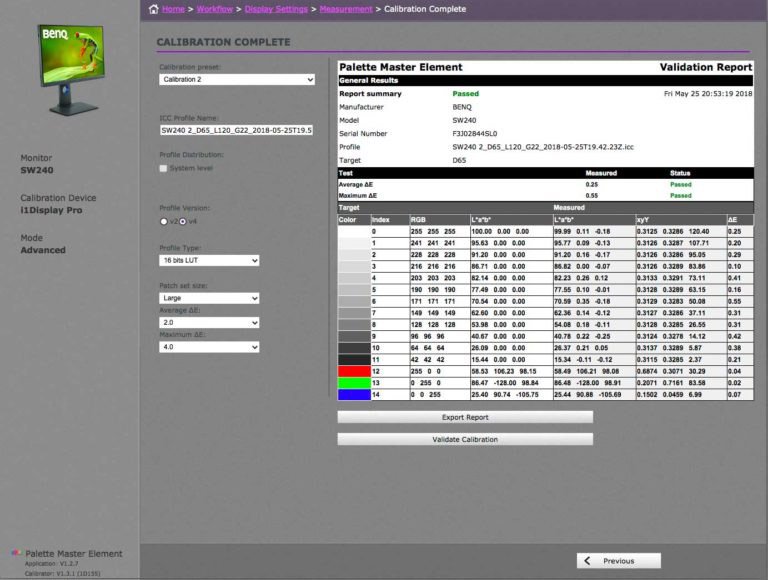
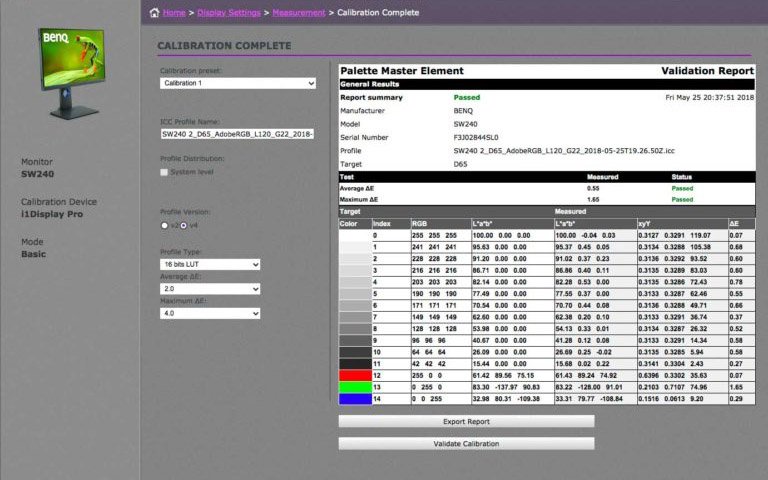
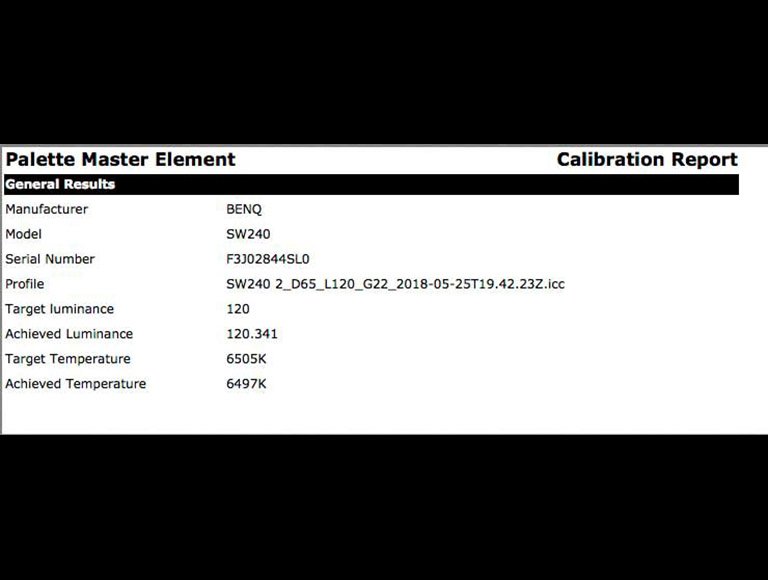
You can run a validation check – some more measurements are taken and you get this report.

I’ve used the Adobe98 gamut setting of the monitor here.

Mode avancé

Le processus d’étalonnage/profilage fonctionne de façon similaire avec le mode avancé, vous obtenez juste plus d’options et le processus est un peu plus long.

If you’re new to setting up such monitors, don’t get too concerned about all the options.

I’d suggest that if you take the approach that a ‘default setting you don’t understand is one that probably doesn’t need changing’, you won’t go wrong to start with.

Take these ‘photographer’ settings for example…

Nothing too bad about selecting D65 and Adobe98.

Personally, I find 160 cd/m2 a bit bright for my editing choice. I’d prefer ~120 or even 100 if I’m working in a darker room and editing for prints.  It does depend on just what sort of environment you’re working in, but remember that having your monitor too bright is one of the most common reasons for dark prints.

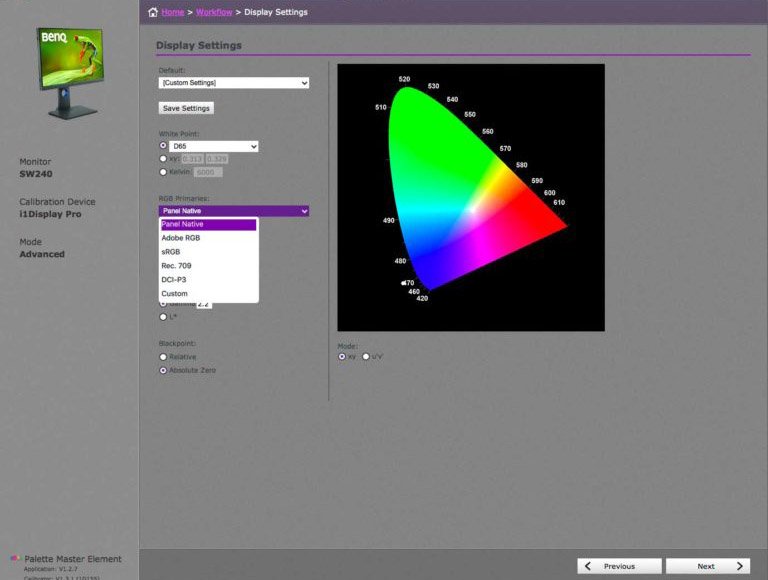
You can also set the RGB primaries to the best the display can do (native) or other specific settings.

You can specify a larger set of target colours to measure.

The measurement process is just the same and when completed you get the chance to run the validation step.

Note how I’ve saved this particular configuration to ‘Calibration 2’.

The validation report (info as above) can be saved as well.

Mes préférences de configuration

Ainsi que mentionné, les paramètres « photographe » par défaut du moniteur ne vont pas constituer un problème pour la plupart des personnes l’utilisant.

However, my own preferences are to fine tune things a bit for my work.

D65 at 120 is fine for my day to day editing, where I’m often supplying images for web use. I use the panel’s native gamut settings to get the best range of ‘real’ colours it can manage.

I generate the 16 bit LUT versions of profiles since they give a marginal benefit on my Mac.

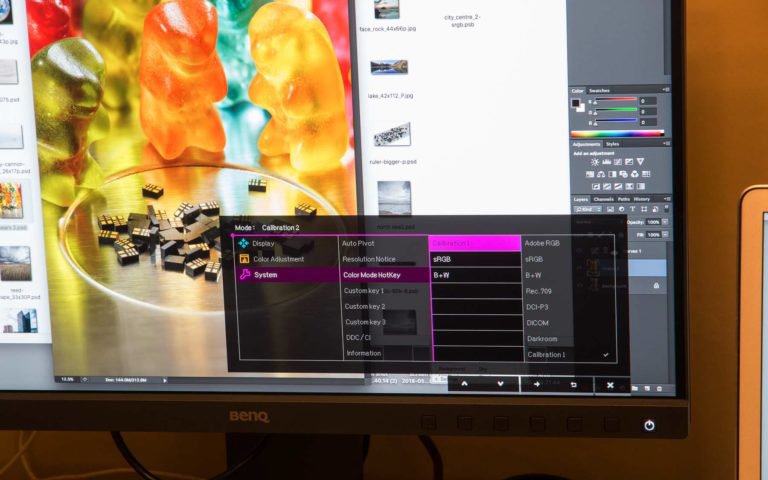
One of the features of the SW240 is that you can quickly switch between stored calibrations via the on-screen display.

The quick selection button offers three settings to be used.

The standard setup includes a B&W mode for the screen – I do a lot of B&W work, so prefer to do conversions from colour to B&W under my control. That lets me cut out that one.

My own set of three ‘quick select’ options are:

  • Calibration 1: D65 120cd/m2, native gamut, G2.2– Day to day use
  • Calibration 2: 5500K, 100cd/m2, native gamut, G2.2– Print preparation and soft proofing
  • sRGB 160cd/m2– ‘Quick check’ of what images will look like to many web users

With my Macs, there is one thing to note about swapping calibrations on the monitor. Swapping the calibration does not change the active ICC profile for the screen. The ICC profile is what applications (such as Lightroom/Photoshop) use to ‘know’ what to display.

This means that if I swap from C1 to C2 I need to swap the active profile in my System Preferences – this is why meaningful profile names matter.

For the ‘quick sRGB check’ I don’t bother, since web display colour management still remains an area of unpredictable mystery (made worse by phones).

For video, you might want different settings groups, but the nice thing is that you have all the options.

Conclusions

Un moniteur très agréable à utiliser.

The matt screen surface is good at handling extraneous light, as you can see from the print frame and glass behind the screen (note a bit of moire on the screen – a camera artefact).

The IPS screen is pretty even, with only a slight falloff along the very bottom of the screen I tested. Even that is much less noticeable if you’re properly square on to the screen.

I use  a monitor hood with the main monitors in my office, so did wonder if I’d notice the lack of one with the standard SW240.

Not too much actually – reminding me that I never used one for the first 25 years of my image editing history.

The BenQ hoods fit very easily (see my other reviews) but I’m sure that if you’re really on a tight budget and wanted to use the SW240 in a bright environment, you could make one from black art board ;-)(Note – At the time of writing, I see the SW240 being offered in the US with a free hood)

In these days of super high resolution screens, I’m going to say that for general working I prefer the lower PPI of this 1920 pixel wide screen. I don’t do 4k or 8k video and have no desire to watch video/TV content on a screen that close to me.

I need glasses for screen use and find that current implementations of content scaling for high DPI screens don’t work well enough. I know that when Karen tested the 4k SW271 (see my SW271 review) on her Mac she found that at 27″ she preferred to set the resolution to 1920 wide (with super fine 4k HDR as and when actually needed).

I suppose I’m saying that you don’t need to jump on the 4k bandwagon just yet – at least not at 24″ width.

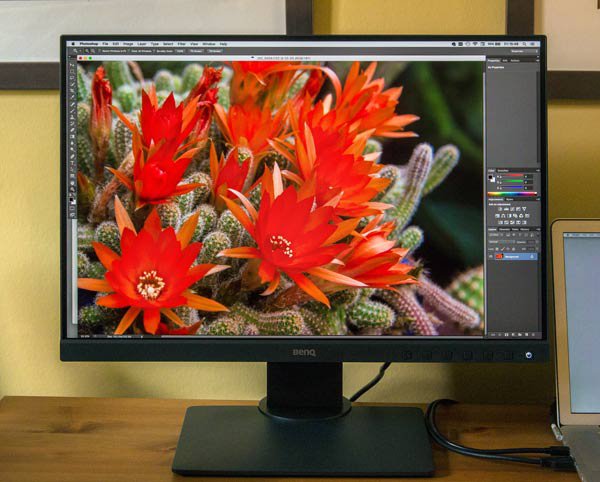
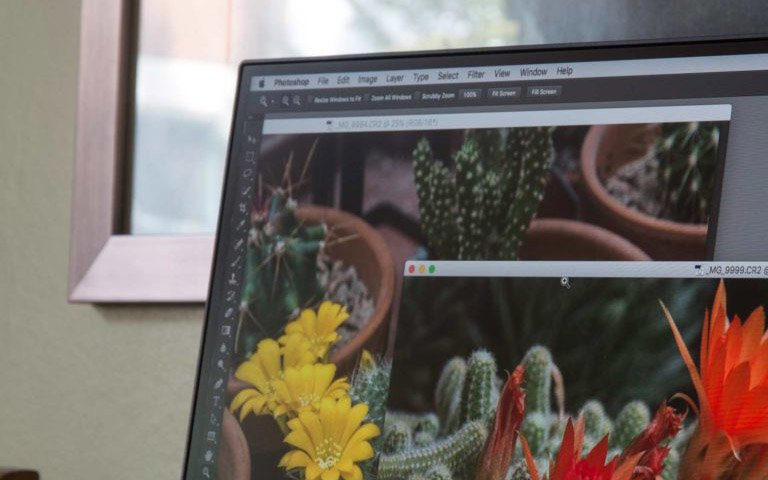
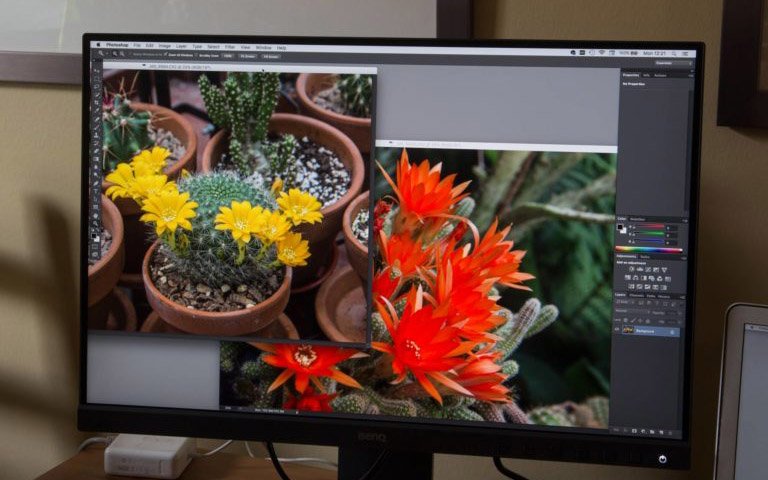
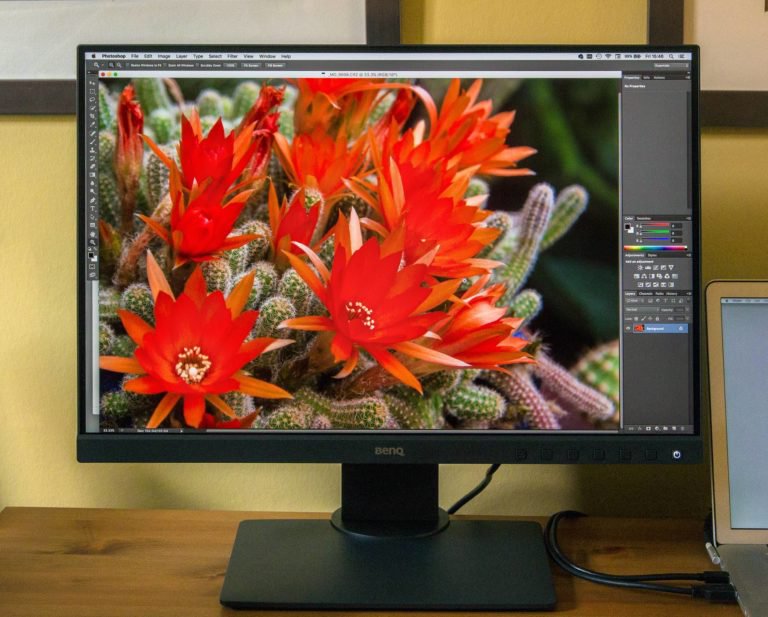
It’s difficult to show the real benefits of a wide gamut monitor in a web article, but the image of the cactus flowers in our conservatory made it really clear

The insides of the red flowers show almost no structure when viewed on my laptop screen, or with the SW240 set at sRGB.

Move to A98 (or ‘native’ as I had it set) and there is clear detail in those intense reds.
A different view (slightly different white balance) shows some of the detail, but for both these examples I’ve had to turn down the saturation when processing the images for display here, on the web.

The use of a larger gamut also brings out more detail and depth in those dark background greens/browns.

As you’d expect, printing this image raises all kinds of issues.

Update: I’ve written another article covering the editing and printing of bright colours in photos.

The monitor has a useful range of inputs, with the two USB sockets and SD card reader at the side being helpful, although a little tricky to reach without access to the back of the monitor.

The screen is quite elegantly styled, and it was only when I looked at some older monitors I realised just how thin that edge was.

It’s interesting to see what were once the specifications of really high end monitors making it into the broader market. If you take care with your approach to colour management, stepping up to a monitor like this can make a real difference to your photographic output and print quality.

It’s a monitor I’d be happy to take with me when explaining the benefits of colour management to clients, if just to show the clear difference between the MacBook display and the SW240 for those red flowers.
Moniteur pour Photographe Adobe RGB 24,1 pouces | SW240

  • 99% Adobe RGB Color Space with IPS technology
  • 24.1 Inch 1920x1200 Resolution
  • Hardware Calibration with accuracy color

Cet article vous a été utile ?

Oui Non
Filtre
Tout effacer
  • {{item}}

    {{itemGroup.title}}
  • {{itemTag.title}}

{{productsCount}}Résultat

{{displaySortType}}

  • {{item.displaySortType}}
  • {{item}}

  • Économisez {{currency}}{{item.saveAmount| numberThousandsCommas | numberDecimalPoint}}
    Économisez {{item.savePercent| numberThousandsCommas | numberDecimalPoint}}%

    {{item.productWordingTag}}

    {{item.title}}

    • {{point}}

    {{currency}}{{item.finalPrice| numberThousandsCommas | numberDecimalPoint}} Économisez {{currency}}{{item.saveAmount | numberThousandsCommas | numberDecimalPoint}} Économisez {{item.savePercent | numberThousandsCommas | numberDecimalPoint}}%

    Prix du nouveau produit{{currency}}{{item.regularPrice| numberThousandsCommas | numberDecimalPoint}}

    Comparer

Comparer les produits

  • {{item.title}}

    {{currency+' '}}{{item.finalPrice | numberThousandsCommas | numberDecimalPoint}}

    Économisez {{currency}}{{item.saveAmount | numberThousandsCommas | numberDecimalPoint}}

    Économisez {{item.savePercent | numberThousandsCommas | numberDecimalPoint}}%

    {{currency+' '}}{{item.regularPrice | numberThousandsCommas | numberDecimalPoint}}

Comparer

Tout effacer

Temporarily unavailable.

Link under maintenance.