{{item.name}}
Price: {{currency}}{{item.price| numberThousandsCommas | numberDecimalPoint}}
Qty: {{item.amount}}

Remote Work & Learning


Projectors

Monitors
Lighting
Interactive Displays & Signage
Remote Work & Learning
Shop
Most people see a dark room as a gloomy space that needs more light. That’s why common solutions often involve LED strips, floor lamps, or wall sconces to brighten things up.
For programmers, however, darkness is often intentional. A dim environment can reduce distractions and help you stay focused on code, but the tradeoff is that your eyes bear most of the strain.
This guide will cover both perspectives: how to generally light a dark room and how programmers can protect their eyes with the right supplementary lighting.
Working in a dark room feels like the perfect setup for coding: no distractions, no glare from overhead lights, just you and your monitor. But what feels productive can quietly strain your eyes.
Here’s why:
Problem
What Happens in a Dark Room
Impact on Programmers
Harsh contrast
Your screen becomes the only light source. Against a pitch-black background, every line of code appears brighter than it should.
Eyes are constantly adjusting to extreme contrast, which causes contrast glare.
Faster fatigue
In the dark, pupils stay dilated, making your eyes extra sensitive to light.
Long hours of coding can lead to headaches and eye strain.
Dry eyes & poor sleep
Reduced blinking and disrupted light signals can confuse your circadian rhythm.
This can results in dry eyes and make it harder to rest after late-night coding.
In short, a pitch-black room doesn’t just boost focus, it also increases the strain on your eyes. Without the right supplementary lighting, you’re trading long-term comfort for short-term concentration.
Not every dark room needs to stay gloomy. Whether it’s a bedroom with no windows or a living space painted in darker colours, the goal is usually to add layers of light so the room feels balanced and more comfortable. Here are some of the most common solutions people look use:
Lighting Method
How It Works
Best Use Case
LED strips
Flexible strips can outline shelves, desks, or walls to provide soft, indirect illumination.
Great for adding modern accents or making small rooms feel more open.
Floor lamps
Portable and easy to reposition, they often provide upward or diffused light.
Ideal for renters or anyone who needs flexible lighting without making renovations.
Wall sconces / wall lights
Mount on walls to cast light across surfaces and reduce shadows.
Works well in hallways, bedrooms, or any space where floor space is limited.
Recessed lighting
Built into the ceiling, providing clean, unobtrusive brightness.
Ideal as a permanent solution for living rooms or offices.
Mirrors & light colours
Reflects and spreads existing light, with lighter walls amplifying the effect.
Simple trick to make any dark space appear brighter without new fixtures.
Floor Lamp
LED Strips
Wall sconces / wall lights
Not everyone wants to make a dark room brighter. For programmers, the darkness is often intentional. It creates a deep-focus zone where distractions fade away. Late at night, coding in a pitch-black room with only the monitor glowing can feel natural and immersive.
But the same setup that sharpens concentration also magnifies eye strain. The real challenge is finding a way to add just enough light to protect your eyes without breaking your coding atmosphere.
Immersion vs. Comfort
The darker the environment, the harder your eyes work to handle contrast.
Short-Term Productivity vs. Long-Term Health
You may finish more tasks tonight, but your eyes pay the price tomorrow.
The Missing Link
What you need isn’t a fully lit room, it’s supplementary lighting that reduces strain without disrupting focus.
This is where a different approach, bias lighting, comes in. By softly illuminating the area behind your screen, you can maintain your coding cave while protecting your eyes from the hidden costs of working in total darkness.
Bias lighting is a simple yet powerful technique: place a soft light behind your monitor so it shines onto the wall, not your eyes or the screen itself. Rather than brightening the entire room, it balances the contrast between your glowing display and the dark surroundings.
You might be wondering: why add extra light if you can already see the screen clearly? The answer is contrast glare. When your monitor is the only light source in a pitch-black room, your eyes must constantly adapt between the bright display and the dark surroundings, leading to strain, fatigue, and discomfort. Bias lighting solves this by softening that extreme contrast, creating a more comfortable viewing experience without breaking the coding atmosphere.
Why it works:
Relieves visual strain
By lowering contrast glare, your eyes don’t need to constantly readjust.
Makes text easier to read
Balanced background light reduces eye fatigue when scanning lines of code for hours.
Preserves immersion
Unlike a floor lamp or overhead light, bias lighting keeps the “coding cave” intact while adding comfort.
So how does bias lighting actually stack up against a regular desk lamp or room lighting? Here’s a quick comparison:
Lighting Type
How It Works
Pros
Cons
Room lighting
(floor lamp, wall light, LED strips)
Brightens the entire space.
Improves general mood, reduces gloominess.
Can break immersion for programmers who like a dark setup.
Desk lamp
Directs light onto your desk or keyboard.
Good for paperwork and task lighting.
Creates glare, screen reflections, and uneven brightness.
Bias lighting
Illuminates the wall behind your monitor.
Reduces contrast glare, lowers eye strain, preserves focus.
Doesn’t brighten the whole room. Built for visual comfort, not ambience.
Want a deeper dive? Read our detailed guide here: What is a monitor backlight and why do you need it?
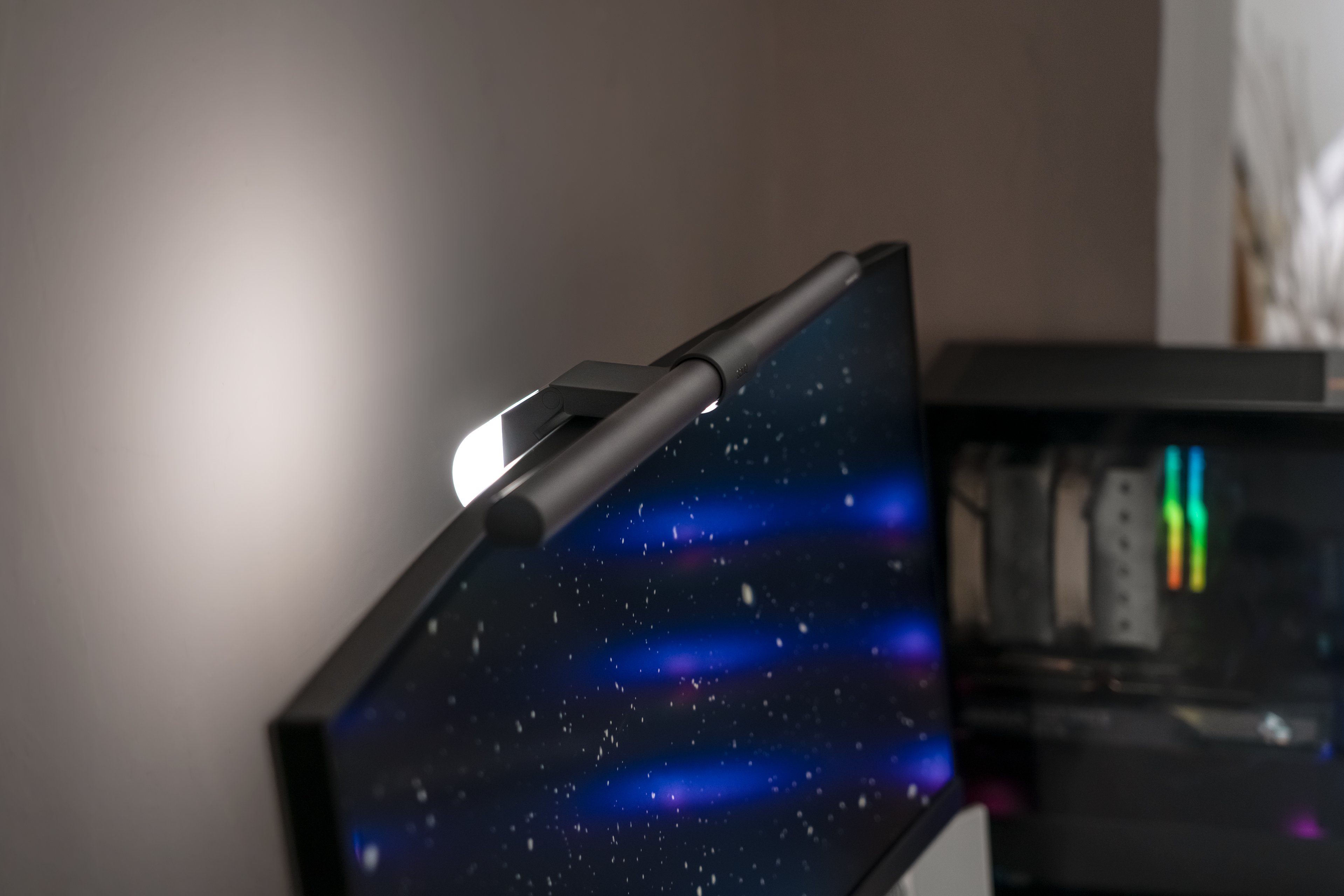
For programmers, the challenge is striking a balance: keep the room dim for focus, but add just enough light to stay comfortable. That’s where the BenQ ScreenBar Halo 2 comes in. It combines front task lighting with rear bias lighting, designed specifically for people who spend hours in front of a screen.
Bias lighting
Softly illuminates the wall behind your monitor, reducing contrast glare and creating a more comfortable coding environment without breaking immersion.

Auto-dimming
Instantly adjusts brightness based on your environment, so you can always code with the right amount of light, no manual tweaking required.
Precise brightness and colour temperature control
The wireless controller lets you fine-tune levels with digital accuracy. Instead of vague “low / medium / high” steps, you get exact numeric feedback, making adjustments repeatable and consistent.
Even if you prefer a darker workspace, the best setup blends both general room lighting and focused desk lighting:
Lighting Zone
Recommended Setup
Why It Helps
Room
Keep a dim floor lamp or LED strip in the background.
Prevents extreme contrast between the monitor and the surroundings.
Desk
Use a monitor light bar with front and rear lighting.
Lights your keyboard without glare; bias light reduces strain.
Colour temperature
Daytime: 4000–5000K
Night: 2700–3500K.
Matches the circadian rhythm, improves comfort, and sleep.
Surfaces
Matte walls and non-reflective desks.
Avoids harsh reflections and glare hotspots.
The goal isn’t to make your workspace bright. It’s to create a balanced, comfortable environment that lets you stay focused without sacrificing eye health.
Working in a dark room may help you concentrate on code, but it also increases the stress on your eyes. The best lighting for dark rooms isn’t about blasting brightness everywhere., it’s about smart supplementary light that reduces contrast glare and protects your vision.
With bias lighting and solutions like the BenQ ScreenBar Halo 2, programmers can keep their immersive, distraction-free setup while giving their eyes the comfort they deserve.
Monitor Lighting that Empowers Your Focus and Flow

Recommended Products
{{item.productWordingTag}}
{{currency}}{{item.finalPrice| numberThousandsCommas | numberDecimalPoint}} Save {{currency}}{{item.saveAmount | numberThousandsCommas | numberDecimalPoint}} Save {{item.savePercent | numberThousandsCommas | numberDecimalPoint}}%
new device price{{currency}}{{item.regularPrice| numberThousandsCommas | numberDecimalPoint}}