This is the third important factor to consider. Sure, getting the biggest screen you can afford is tempting, after all bigger should be better, right? But, not really. As we mentioned before, larger screens take up more storage space, weigh more, and require more setup.
You should think about how far you want to sit from the screen, how bright your projector is, and in what ambient lighting conditions you’ll be using the projector and screen.
Seat to screen distance is important because the viewing experience might be uncomfortable. Take a look at this seating to screen distance guide for more info.
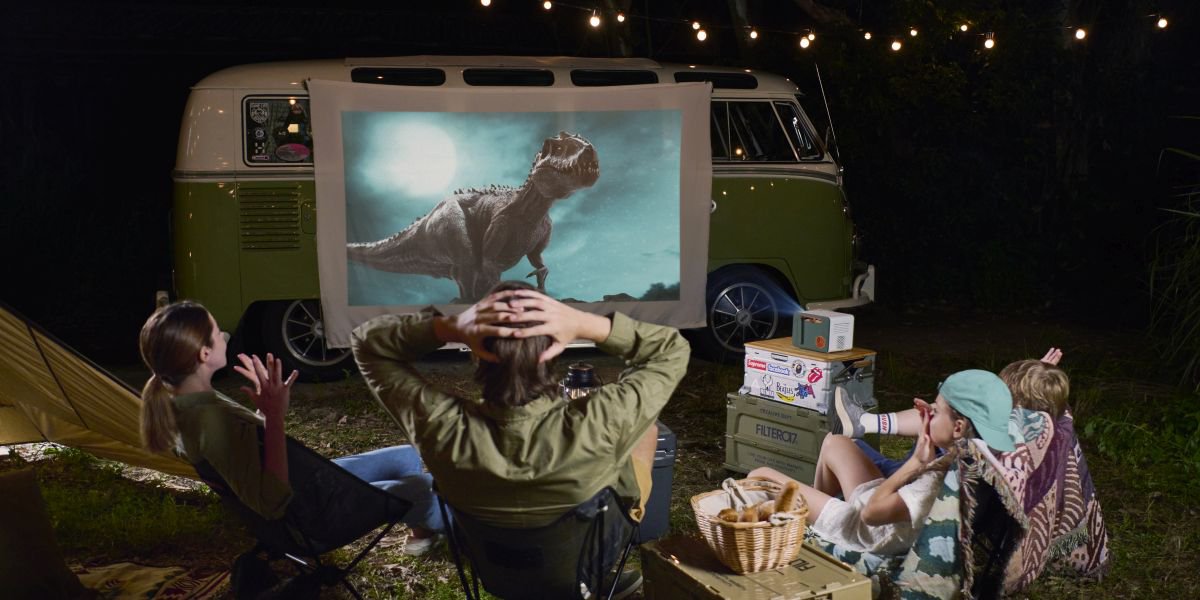
While 100”-120” is common for home cinema room and also for large outdoor gatherings, it may be too big for you. If you do plan to have a large group of people watching, let’s say more than ten, then that size is advisable for camping, backyard movie nights, and so on. However, for multi-use viewing, 80” might be the best option. Assuming you’re with just a handful of people or even by yourself, this screen size looks great from various distances while easier to store and move around. You can also easily use an 80” screen at home in smaller rooms, like a bedroom. So, in this size, you get more versatility. You should always consider your projector’s resolution, brightness, and viewing angles when shopping for screen size. As a rule, bigger screens mean your projector should have higher resolution and more powerful illumination, aka higher brightness.
Take a look at this cute graphic for a quick guide of different brightness values for screen sizes: