Projectors
Monitors
Lighting
Interactive Displays & Signage
Remote Work & Learning
Wireless PresentationShop
Welcome to BenQ Europe
How can I change my BenQ cookie settings?
Some essential features on BenQ sites just won’t work without cookies. And having other cookies switched off can seriously affect the way you’ll be able to enjoy our services.
Please check your cookie settings below and turn on any cookies you’re happy with.
“Strictly necessary” cookies can’t be turned off. But Functional and Performance cookies can be turned on or off below. You can learn more about cookies and what they do on our other pages.
If you've chosen to block third-party cookies on your browser, your cookie preferences won't carry over from benq.eu to benq.xx and vice versa. Please make sure to set your cookie preferences in both places.
On
Strictly necessary cookies
These cookies are essential so that you can move around the website and use its features. Without these cookies services you have asked for cannot be provided.
On
Off
Functional cookies
These cookies allow the website to remember choices you make to give you better functionality and personal features.
On
Off
Performance cookies
These cookies help to improve the performance of BenQ. If you want to opt-out of advertising cookies, you have to turn-off performance cookies.
Need help choosing your next BenQ product? Our online Live Chat connects you with real experts. No bots - just genuine human assistance.
Chat with us today!Need help choosing your next BenQ product? Our online Live Chat connects you with real experts. No bots - just genuine human assistance.
Chat with us today!
As the 2010s dawned, there was a strong push among science fiction fans and content creators alike to move in a more realistic direction. Sure, space travel with loud, booming sound and magical gravity works fine in Star Trek or Star Wars and other mainstream sci fi, but hard sci fi calls for a realistic depiction of space. With model making as well as computer art technologies becoming more accessible and advanced, creating science fiction movies and TV shows that are closer to reality was more feasible. Even huge blockbuster Avatar, released in the last few weeks of 2009, was very much grounded in real science.
With this trend in full swing, we got excellent movies like The Europa Report and of course Christopher Nolan’s Interstellar. But perhaps the most impressive effort thus far has been The Expanse, an entire TV show dedicated to smart science fiction that’s almost completely free of old clichés like noisy space, slow space, magical gravity, and so on. The Expanse is dedicated to a portrayal of space that’s as close to reality as possible, and by doing so has become known as The Expense to crew and fans, because sci fi this meticulously and uncompromisingly realistic still costs a lot of money to make.
The first season of The Expanse came almost out of nowhere in late 2015, produced by SyFy. The show stayed with SyFy for three seasons and then was canceled due to high production costs and low viewership. Luckily, Amazon Prime Video bought the show and financed the next three seasons, with the sixth and final one releasing one episode per week as of this writing, and scheduled to end mid-January 2022.
While with SyFy, The Expanse was formatted in crisp 1080i that’s still quite appealing. However, the move to Amazon signaled a big change, as the final three seasons are in true 4K HDR, so they’re a treat if you’re watching on a big screen.
The Expanse is based on a series of novels written together by Ty Franck and Danial Abraham under the pen name James S.A Corey. The show stays pretty faithful to the books, with the plot beginning on an unspecified year in the 23rd century. In that setting, humanity has fully settled the Moon, Mars, and the asteroid belt. Earth is powerful but riddled with socio-economic and ecological issues, while independent Mars is growing in power and tending towards militarism. The asteroid belt is the poorest of the three, used by the inner planets as a cheap labor pool for extracting resources. The belters, those who live in asteroids and on space ships in the belt, want independence and dignity, while Earth and Mars want to maintain power and order in the solar system. The most unpredictable and violent factions of the belters have no issues with mass casualty terror attacks on Earth and Mars, leading to an inevitable cycle of violence that’s only exacerbated when alien technology becomes part of the story.
The show’s cast changed a lot over the course of the last six plus years. But the core remains Steven Strait, Dominique Tipper, Frankie Adams, Wes Chatham, Cara Gee, and Shohreh Aghdashloo. They all do a wonderful job portraying their respective characters, with former stars Thomas Jane, Cas Anvar, and Florence Faivre very much missed!
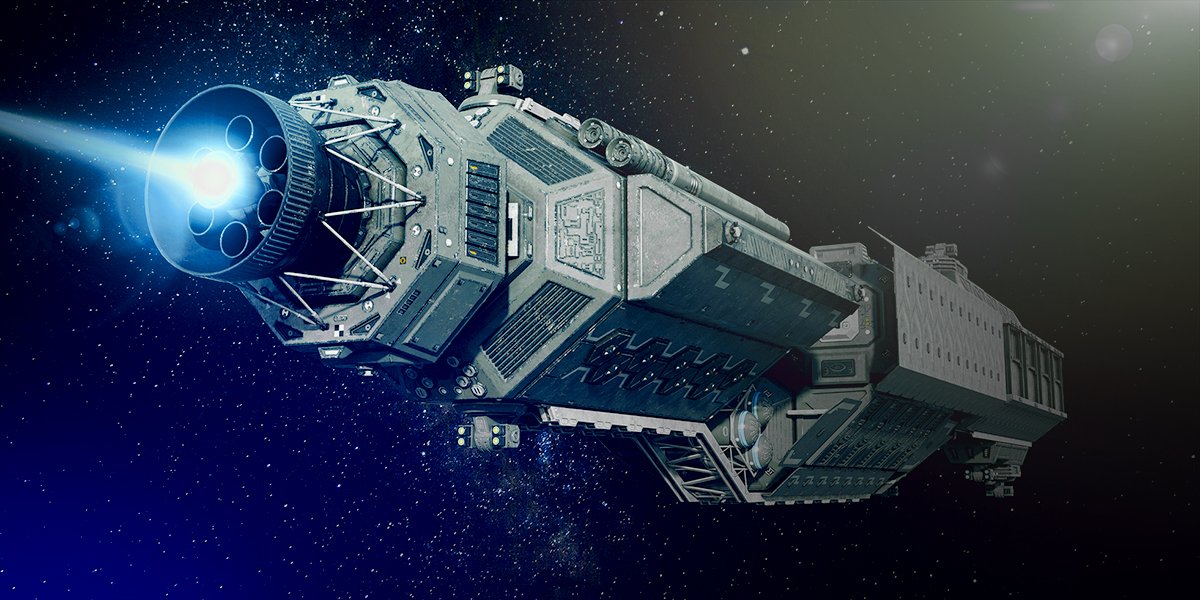
No other sci fi project we can think of has done so much and has gone to such lengths to make sure space travel is shown realistically. Ships don’t have artificial gravity, so coffee mugs just stay in place, floating, while crew move around in magnetic boots. Space isn’t instantly deadly, and we’re shown people opening their spacesuit helmets to scratch their noses while outside their ships. Space travel takes time and there’s no instant communication due to the long distances, so people have to listen to recorded messages. Explosions are convincingly shown as we know they behave in the near vacuum of space, not the spectacular fireworks shows of Star Wars and other popular sci fi. Space battles are rare, and when they do happen, they use high speed missiles and railguns, not purple lasers. Most importantly, spaceships don’t look like ocean liners or naval war ships in space, but very much like the designs currently projected by space agencies and private contractors.
Perhaps this dedication to realism is what hurt The Expanse and other such projects in the end, as by the time the 2010s ended it seemed people once more were craving unrealistic sci fi. After all, perhaps it’s the job of science fiction to give us something different from reality.
Possibly we use this word too often, but “textured” applies so well to The Expanse. Hands down this is one of the most beautiful shows ever made, and could be that’s why we’ve held off writing about it. Describing The Expanse isn’t easy, but you’ll be taken aback, for sure. Every environment is painstakingly created. Ship interiors look like the real thing, with instruments and labels all over the place as you’d expect. Earth, Mars, and the asteroid belt each have their unique looks and diversity of characteristics. On Earth we have crowded and somewhat dangerous but still exciting cities, farmlands, desolate tundra, and much more. Mars is a mix of open wasteland and advanced urban centers. And the belt has its own charms, with colorful settlements and lots of empty space. And we haven’t even discussed the various new languages that emerged in The Expanse’s timeline or the new alien worlds that our characters get to explore, but that’s already a bit of a spoiler.
If you’re even remotely interested in science fiction and haven’t watched The Expanse yet, then we really don’t know what you’re waiting for. Best enjoyed in true 4K, The Expanse is a masterpiece of a television show, and we will sorely miss it once it wraps up.
Recommended Products
{{item.productWordingTag}}
{{currency}}{{item.finalPrice| numberThousandsCommas | numberDecimalPoint}} Save {{currency}}{{item.saveAmount | numberThousandsCommas | numberDecimalPoint}} Save {{item.savePercent | numberThousandsCommas | numberDecimalPoint}}%
new device price{{currency}}{{item.regularPrice| numberThousandsCommas | numberDecimalPoint}}