Projectors
Accessories
Accessories
Projectors
Monitors
Lighting
Accessories
Interactive Displays & Signage
Shop
Welcome to BenQ Europe
How can I change my BenQ cookie settings?
Some essential features on BenQ sites just won’t work without cookies. And having other cookies switched off can seriously affect the way you’ll be able to enjoy our services.
Please check your cookie settings below and turn on any cookies you’re happy with.
“Strictly necessary” cookies can’t be turned off. But Functional and Performance cookies can be turned on or off below. You can learn more about cookies and what they do on our other pages.
If you've chosen to block third-party cookies on your browser, your cookie preferences won't carry over from benq.eu to benq.xx and vice versa. Please make sure to set your cookie preferences in both places.
On
Strictly necessary cookies
These cookies are essential so that you can move around the website and use its features. Without these cookies services you have asked for cannot be provided.
On
Off
Functional cookies
These cookies allow the website to remember choices you make to give you better functionality and personal features.
On
Off
Performance cookies
These cookies help to improve the performance of BenQ. If you want to opt-out of advertising cookies, you have to turn-off performance cookies.
Just landed! MA320UG 4K 120Hz Monitor for Mac
Shop NowJust landed! MA320UG 4K 120Hz Monitor for Mac
Shop Now
Important Product Recall Notice - GV31
Read moreImportant Product Recall Notice - GV31
Read more
Need advice? Our online chat connects you with real experts instead of bots
Chat with us todayNeed advice? Our online chat connects you with real experts instead of bots
Chat with us today
Besides affecting the eyes, the light also affects the brain. This is because the retinas in the eyes not only convert the received light into an image, they also transmit the bright and dim messages of the light to the pineal gland of the brain. The pineal gland is affected by bright and dim messages, and this consequently affects the secretion of melatonin. Melatonin is the key to controlling whether people want to stay awake or want to sleep. During the daytime, the secretion of melatonin is inhibited by bright light, which makes people mentally focused. When it is night and is time to go to bed, the light turns yellow and dim, and the secretion of melatonin increases, which reminds the body it is time to go to bed.
Hence, a good desk lamp can change its “color temperature” according to your daily work-rest schedule. It adopts cold white light during daytime which enables you to focus your mind, and uses warm yellow light when it is time to go to bed, which is suitable for bedside reading, thus avoiding delays in falling asleep. In addition, many studies indicate that learning efficiency is higher under cold white light and results in fewer mistakes in answering questions. There are Korean studies indicate that it is easier to stimulate innovation under warm white light, making it suitable to use in art rooms or music rooms.
The greatest advantage of an LED desk lamp is its dimmable color temperature, which enables any combination from warm yellow to cool white. Other advantages include power savings and longevity. The operating time of an LED desk lamp is 40,000 hours, assuming it operates 8 hours per day, which is equivalent to being used for 14 years. The LED light source has no ultraviolet rays (UV) or infrared rays (IR), hence the LED desk lamp neither hurts the skin nor generates heat.
As for LED desk lamps, it is inevitable that we mention whether it is harmful to the eyes. It is true that light enables the eyes to see books and objects clearly, but bad light may hurt the eyes. What is bad light? Blue light and flickering are two key issues to be concerned about. It is easy to cause retinopathy when the retina receives strong blue light waves for a long time, that is the “blue light hazard” we usually hear about. Flickering is another source that may hurt the eyes. When the brightness of light becomes suddenly bright and suddenly dim over time, it means that the light is flickering, something we generally call stroboscopic. Some doctors claim that even if the flickering is in very high frequency so that you can’t feel it, it may still generate rapid contraction of the eye muscles, which may make your eyes or body feel uncomfortable.
Therefore, when purchasing a LED desk lamp, besides enjoying its advantages, it is also necessary to check whether it meets the blue light safety standards of the EU and whether it passes the IEEE PAR 1789 for stroboscopic testing (the BenQ desk lamp series achieves a flicker ratio of less than 10% through the non-flicker circuit design. This is almost the lowest value in the industry).
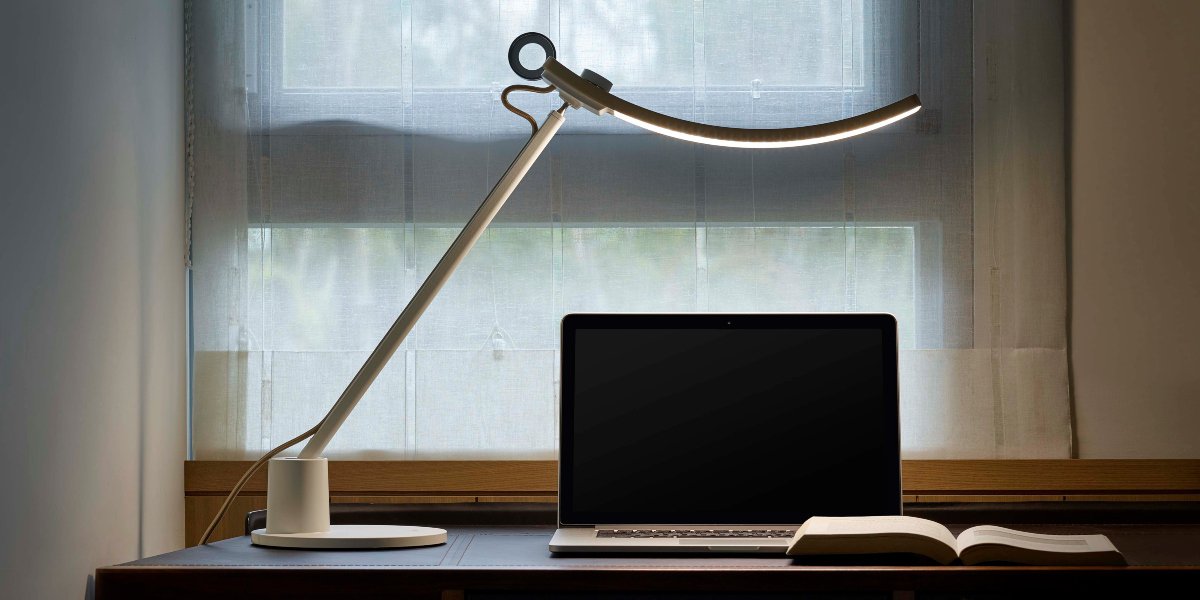
LED desk lamps enable a variety of choices in light, which can be used from day to night under different circumstances. A LED desk lamp that meets international standards not only makes the eyes more comfortable, but also greatly improves the efficiency of work and reading. Check out BenQ's e-Reading LED desk lamp series that offers a wider, safer and more comfortable reading experience for screen and traditional reading.
{{productsCount}}Result
{{item}}
{{item.productWordingTag}}
{{currency}}{{item.finalPrice| numberThousandsCommas | numberDecimalPoint}} Save {{currency}}{{item.saveAmount | numberThousandsCommas | numberDecimalPoint}} Save {{item.savePercent | numberThousandsCommas | numberDecimalPoint}}%
new device price {{currency}}{{item.regularPrice| numberThousandsCommas | numberDecimalPoint}}
{{item}}
{{itemTag.title}}
Max 4 products to compare reached.